Ultherapy in Dubai lifts and tightens skin using FDA-cleared HIFU technology, no surgery, no downtime, with results building over 2-3 months. Here’s what to expect at a DHA-licensed clinic.
If your skin is starting to feel less firm along the jawline, neck, or brow but you’re not ready for a surgical facelift, Ultherapy is likely the treatment your dermatologist or aesthetic doctor will mention first. It’s the original FDA-cleared High-Intensity Focused Ultrasound (HIFU) device, backed by more than 120 published studies and over 3 million treatments performed worldwide, which is why it’s widely referred to in the industry as the “gold standard” for non-surgical skin lifting. Unlike topical treatments or lasers that work on the surface, Ultherapy sends focused ultrasound energy directly to the SMAS layer, the same deep structural layer a surgeon addresses in a facelift, to stimulate your body’s own collagen and elastin. At Yeppeun Skin Clinic in Jumeirah 2, we perform Ultherapy using Korean-standard technique protocols within a DHA/MOHAP-licensed setting, so energy levels and treatment depth are calibrated to your specific skin, not a one-size-fits-all setting.
What are the benefits of Ultherapy?
Ultherapy’s core benefit is a visible lift and tightening effect without surgery, incisions, or injectables. Because it works at the SMAS level rather than the surface, the results look natural, skin appears firmer and more contoured rather than “pulled.”
Key benefits include:
- Non-surgical, non-invasive lift: no cuts, no needles beyond the treatment applicator, no general anesthesia.
- Zero real downtime: most patients return to work or normal activities the same day.
- FDA-cleared for the face, neck, and décolletage, with off-label use on areas like the arms, abdomen, and above the knees for skin tightening.
- Works on most skin types and tones, including darker skin, since it targets the deep dermis and SMAS layer rather than melanin in the skin’s surface.
- Gradual, natural-looking improvement rather than an abrupt “done” appearance: friends and family tend to notice you look refreshed, not “treated.”
- One session is often enough for many patients, though your provider may recommend a second session at follow-up depending on your skin’s baseline laxity and how your tissue responds.
- Complements: doesn’t replace: an existing skincare routine, since collagen remodeling continues to improve skin texture and quality over the following months.
It’s worth being clear-eyed here: Ultherapy is a prevention-and-improvement tool for early-to-moderate skin laxity, not a substitute for a surgical facelift in cases of significant sagging. A licensed consultation is the only reliable way to know which category your skin falls into.
What can you expect during an Ultherapy session?
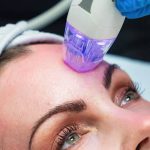
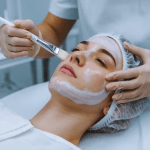
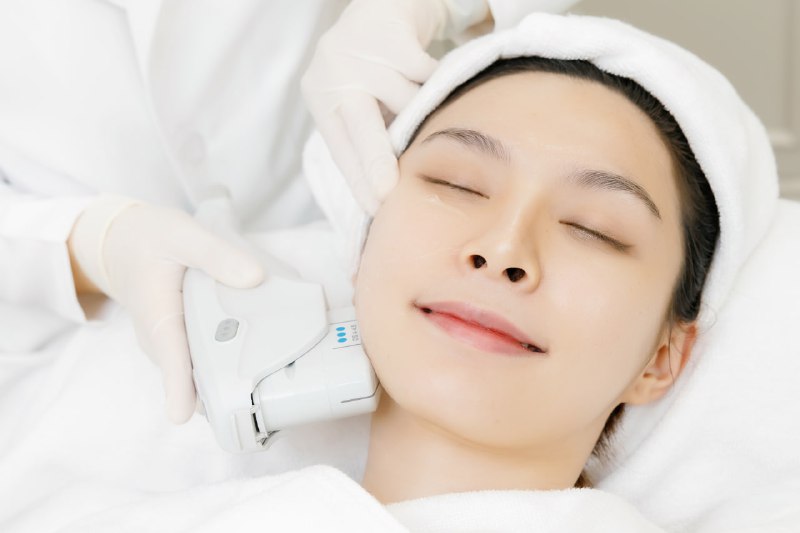
An Ultherapy session at Yeppeun typically takes 60-90 minutes for the full face and neck, depending on the area treated, and is performed in a single visit with no anesthesia required for most patients.
Here’s the general flow:
- Consultation and skin assessment: your practitioner reviews your skin laxity, treatment goals, and medical history to confirm you’re a suitable candidate.
- Cleansing and ultrasound gel application: this helps the device’s imaging function “see” beneath the skin.
- Live imaging: a genuine differentiator of the Ulthera device is that it lets the practitioner visualize the layers of tissue (skin, fat, SMAS) in real time before delivering any energy, so treatment is targeted rather than guesswork.
- Energy delivery: focused ultrasound is delivered in a grid pattern across the treatment area, depositing thermal energy at precise depths (typically 1.5mm, 3.0mm, and 4.5mm) to reach the SMAS layer and deeper dermis.
- Sensation: most patients describe a brief warming or tingling sensation, with some moments of a sharper, quick “zing” as energy reaches the SMAS layer, particularly along the jawline and cheekbones. This is normal and expected: it signals the device is reaching the correct depth. Comfort measures (pacing, cooling, and: where clinically appropriate: a topical numbing option) are used to keep the session tolerable.
- Aftercare: there’s no required downtime. Mild redness or occasional light swelling can occur and typically resolves within a few hours to a day. You can wear makeup and resume normal activities immediately, though we recommend sun protection and gentle skincare for the first 48 hours to support the skin’s healing response.
Following Korean-standard technique, our practitioners map energy lines carefully across facial contours rather than applying a generic grid, which helps produce a more even, natural lift across asymmetric facial structures.
Aftercare tips to support your results: – Apply broad-spectrum SPF daily, since new collagen formation is more responsive to consistent sun protection. – Stay hydrated in the days after treatment, well-hydrated skin tends to respond more comfortably during the healing window. – Avoid harsh actives (strong retinoids, aggressive exfoliating acids) for a few days if your skin feels sensitive, and reintroduce your normal routine as comfort allows. – Keep your follow-up appointment, if one is scheduled, so your practitioner can track how your skin is remodeling at the 6-week and 3-month marks.
How long do Ultherapy results last?
Results build gradually and are not instant, this is one of the most important things to understand before booking. Collagen remodeling takes time, so most patients see initial firming within 4-6 weeks, with full results visible at 2-3 months as new collagen matures.
From there: – Results commonly last up to a year or longer for many patients, since Ultherapy stimulates genuinely new collagen rather than temporarily plumping tissue. – Skin continues to age naturally after treatment, so annual or biannual touch-up sessions are a common maintenance approach for patients who want to sustain the lifted, firmer look over time. – Individual results vary based on your starting skin laxity, age, lifestyle (sun exposure, smoking), and how your body responds to the collagen-stimulation process, a licensed practitioner can give you a realistic expectation based on your own skin during consultation.
If you’re comparing this to a dermal filler or Botox timeline, it helps to reset expectations: Ultherapy is not designed for immediate change. Patients who go in expecting a same-day transformation are often the ones disappointed; patients who understand the 2-3 month build tend to be the happiest with their results.
Is Ultherapy for me?
Ultherapy is best suited to adults with mild to moderate skin laxity who want a lifted, firmer look without surgery, commonly patients in their mid-30s to 60s noticing early sagging around the jawline, jowls, neck, brow, or décolletage.
Good candidates typically: – Have realistic expectations about a gradual, natural-looking result rather than a dramatic surgical outcome. – Are looking to delay or complement, not necessarily replace, a future facelift. – Have skin with some remaining elasticity and collagen reserve for the treatment to stimulate.
Ultherapy may not be the right first step for: – Patients with significant, advanced skin laxity or excess skin, a surgical consultation may be more appropriate. – Anyone with certain implants near the treatment area, open wounds or active skin infections, or specific medical conditions that a practitioner needs to screen for. – Pregnant or breastfeeding patients.
This list isn’t exhaustive, and candidacy always depends on an individualized skin assessment. Nothing here should be read as a diagnosis or a guarantee of suitability, the only way to confirm whether Ultherapy fits your skin, goals, and medical history is a consultation with a DHA-licensed practitioner at Yeppeun Skin Clinic.
A question we hear often is whether Ultherapy is “worth it” compared to newer, cheaper HIFU machines advertised around Dubai. Ultherapy is the original FDA-cleared device in this category, with a substantially larger body of published clinical research behind it than most competing HIFU brands. That doesn’t make it the automatic right choice for every patient, but it does mean the technology itself has a well-documented safety and efficacy track record, which is worth knowing when you’re comparing options and prices across clinics.
What are the possible combinations for Ultherapy?
Ultherapy pairs well with treatments that work at different layers or timelines of skin aging, since it primarily addresses deep structural laxity rather than surface texture or volume loss. Combining treatments, when clinically appropriate, can address multiple signs of aging in a coordinated plan.
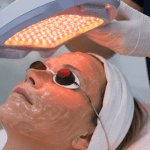
Common combinations include: – Dermal fillers to restore lost volume in areas like the cheeks or temples alongside Ultherapy’s lifting effect on the SMAS layer. – HydraFacial or other surface-level resurfacing treatments to improve skin texture, tone, and glow while Ultherapy works on deeper firmness, often spaced a few weeks apart from the Ultherapy session. – Skin boosters or mesotherapy to support hydration and surface skin quality during the months your skin is actively remodeling collagen. – Botox for dynamic wrinkles (forehead lines, crow’s feet) that Ultherapy, as a lifting rather than muscle-relaxing treatment, doesn’t address. – LED or light-based maintenance treatments between sessions to support skin health as part of an ongoing Korean-standard skincare protocol.
Your practitioner will sequence any combination treatments based on your specific skin needs and appropriate spacing between procedures, this is decided during consultation, not before.
Book Your Ultherapy Appointment Today
Ready to find out if Ultherapy is right for your skin? Book a consultation with our DHA/MOHAP-licensed team at Yeppeun Skin Clinic in Jumeirah 2, Dubai. We’ll assess your skin laxity, walk you through what to realistically expect, and build a treatment plan, Ultherapy alone or combined with complementary treatments, around your goals.
Follow us on Instagram and TikTok @yeppeunskinclinic for real patient journeys, behind-the-scenes looks at our Korean-standard protocols, and skincare tips between your visits.
Frequently Asked Questions
Is Ultherapy painful?
Most patients feel warmth and occasional brief, sharp sensations as the ultrasound energy reaches the SMAS layer, particularly around the jawline and cheekbones. It’s generally described as tolerable rather than painful, and comfort measures can be used during your session. Pain tolerance varies by individual, discuss options with your practitioner beforehand.
Is Ultherapy actually worth it, or is it a HIFU gimmick?
Ultherapy is the original FDA-cleared HIFU device with over 120 published studies and 3 million+ treatments performed globally, which sets it apart from unregulated or less-studied HIFU machines on the market. Results depend on realistic expectations (gradual improvement over 2-3 months, not instant change) and on being treated by a licensed practitioner using proper technique and energy settings.
How many Ultherapy sessions do I need?
Many patients see meaningful results from a single session, since one treatment stimulates an extended period of collagen remodeling. Some patients benefit from a follow-up session depending on their skin’s starting laxity, this is assessed individually during consultation.
Is there any downtime after Ultherapy?
No significant downtime is required. Ultherapy is non-invasive, and most patients resume normal activities immediately, with only mild, temporary redness or swelling in some cases.
When will I see Ultherapy results?
Initial firming can appear within 4-6 weeks, with full results typically visible at 2-3 months as new collagen forms. Results commonly last up to a year or longer, depending on your skin and lifestyle factors.